


We are equal among all': Enver Kapba on Abkhazian sovereignty, 1991
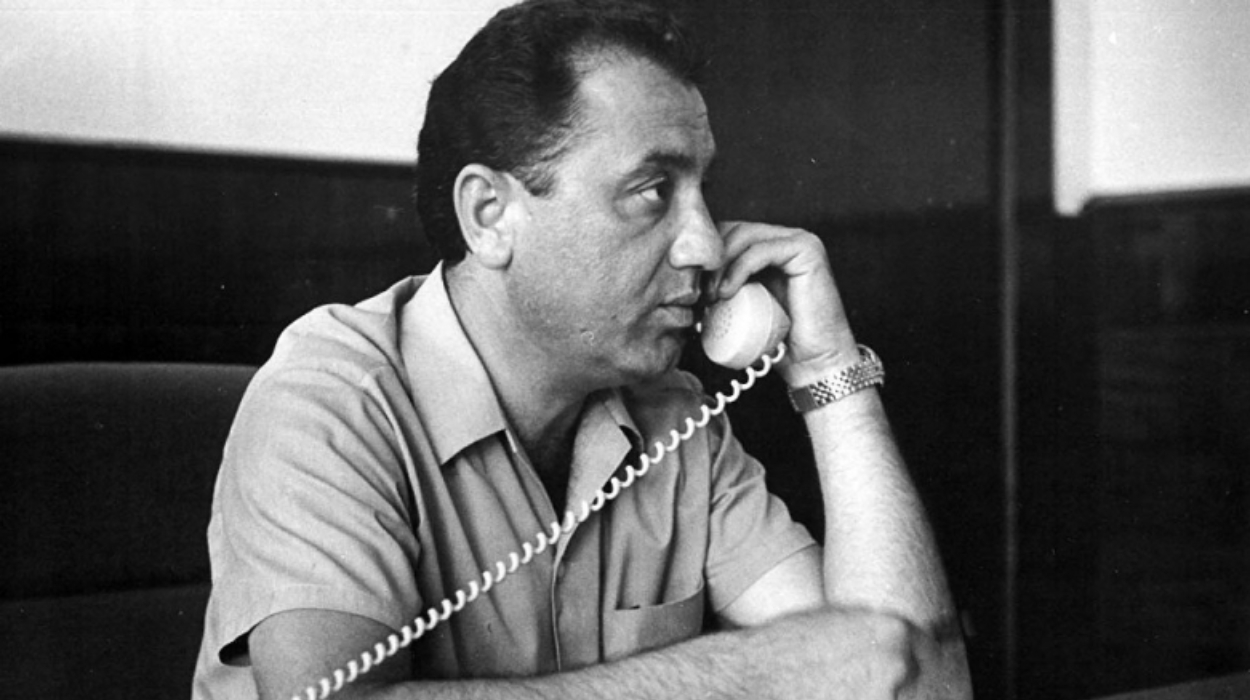
In 1991, months after Abkhazia voted to remain in a renewed Soviet Union, the Italian journalist Mauro Belardi put four questions to Enver Kapba, Deputy Chairman of the Council of Ministers of the Abkhaz ASSR. Kapba speaks about the 1990 declaration of sovereignty, the reasons Abkhazians became a minority in their own country, the clashes of 1989 and the roots of the Soviet Union's national conflicts.
Mauro Belardi: Mr Kapba, on 26 August 1990 Abkhazia declared its independence from Georgia. Could you explain why that decision was taken, and which political and social forces supported it?
Enver Kapba: Well, if Georgia has declared its sovereignty, then we Abkhazians consider that we are entitled to declare ours. As for leaving Georgia, as you put it: we are remaining in the Soviet Union. Georgia is leaving the Soviet Union, and that is its own affair. We are staying in the Soviet Union.
In declaring our sovereignty, we stated that all of this rests on democratic principles, with no violence of any kind, and that it affirms the wishes of the peoples of the republic, not of the Abkhazian side alone. The results of the referendum held on 17 March bear that out. The overwhelming majority of the people stated their wish to be part of a renewed Soviet Union with the rights of a constituent state. We understand that we are a small republic, but we are entirely justified in insisting that we are equal among all. And the people support us in our aspiration to be precisely that: an independent state entity within the renewed Union.
Mauro Belardi: According to our figures, Abkhazians today make up 17 per cent of Abkhazia's population. I would like to ask how it came about that they became a minority in their own land.
Enver Kapba: That is the tragedy of our people. The entire Georgian press and Georgia's leaders, past and present, are forever reproaching us: you Abkhazians are 17 per cent, and so you scarcely have a right to a voice. Historically, Abkhazians were the absolute majority in Abkhazia. But a tragedy befell our people. We all feel it deeply, of course, but that tragedy did take place. When the so-called Caucasian War ended, it was followed by an intensive resettlement, a forced resettlement, of Abkhazians to Turkey, Syria, Jordan and Egypt. There are some even in Yugoslavia and in Greece. In other words, a people was driven out by force. Today, according to every source, Turkish and other European ones alike, more than 500,000 Abkhazians live in Turkey. Bear in mind that the population of Abkhazia is now 550,000. Imagine if those 500,000 were here.
We ended up as 17 per cent precisely because, once the bulk of the population had been expelled from Abkhazia, the vacated land began to be settled. The most intensive settlement came just before the war, the Great Patriotic War, and it continued during the war as well. I should add that the people who were settled here were not glad of it themselves. They were being driven from their own long-established homes, mainly in western Georgia. That is how the proportions came to be what they are now. But all those who juggle these figures never trouble to look into the history of how it happened. On the other hand, our small nation of 100,000 has an equal voice in the whole of the Soviet Union. That, I believe, is genuine democracy.
Mauro Belardi: And did other sections of the population support it too?
Enver Kapba: Of course, of course. The referendum showed it. The overwhelming majority voted in favour, although conditions were very difficult indeed, to the point that a special committee was set up to obstruct the expression of the people's will. But nothing came of it.
Mauro Belardi: In June 1989 a conflict broke out in Sukhum between Abkhazians and Georgians, with dramatic consequences. Do you not think that the conviction of today's Georgian government, which regards Abkhazia as an inalienable part of its territory, will provoke new conflicts? And if so, how do you think Abkhazia could defend its autonomy or independence?
Enver Kapba: The trouble is that honest historians stay silent, while the falsifiers of history proclaim to the whole world that we have been in a single state practically since the days of Adam and Eve. All the historical sources, including a great deal of archival material in Italy, show that for dozens of centuries Abkhazia was an entirely independent state. And if we recall that two Georgian principalities, Kakheti and Kartli, signed a treaty with Russia on the provision of assistance in 1801, Abkhazia signed on its own account in 1810. It independently signed a treaty with the tsarist government on voluntary entry into Russia. We signed separately.
And finally, to speak of our own Soviet period, from 1921 to 1931 Abkhazia was an independent republic. So there are no grounds for claiming that Abkhazia was always a unit, so to speak, of the Georgian state in the past. What I cannot understand is this: if the Georgian people's desire for independence is held to be justified, why should we be denied the same right, the same independence and, in the end, the choice of our own partners?
As for the conflict, those are painful memories, of course, but it too was artificially provoked. The causes had evidently been building up, and clearly the comrades had not looked into these matters in any depth. The trigger, though, was the separation of the Georgian faculty from the Abkhazian University and its subordination, as a branch, to Tbilisi University. Do we really need so many institutions of higher education in Abkhazia? And all of them are called universities. There is the Abkhazian University. There is this branch of Tbilisi University. Then the agricultural institute. And finally a branch of the Polytechnic Institute. All of it has been created artificially. What is it for? Merge everything, close the faculties that are not needed and keep those that are, with a view to training specialists for, say, the next 15 to 20 years. Can that be worked out? It can. But nobody does it, and they do not want to allow it.
As for how to defend our sovereignty, I believe it will be defended by our Soviet Constitution. On the creation of the National Guard, I personally, as a citizen, regard that as an anti-constitutional act. Our sovereignty, our independent statehood within a single Soviet Union, will be defended by our Soviet Constitution and by the Constitution of Abkhazia, on wholly democratic principles.
Mauro Belardi: In the course of our work we have repeatedly heard the view, and have heard it again today, that the present national conflicts have been stirred up artificially. Do you think that view holds beyond your own case? And if so, who do you think might have an interest in stirring them up today, and to what end?
Enver Kapba: In Stalin's time the absolute friendship of peoples was proclaimed to the whole world, while any national awakening was driven deep underground by force and fear. It was construed as nationalism, and what followed, of course, was repression and all the rest. But the national problems were not solved. Now, thanks to our president, a democratic president, and I mean Gorbachev, the time of national awakening has come. And that, of course, is a painful process. Republics have raised territorial claims against one another. Inter-ethnic conflicts have arisen, not only against the background of national awakening but also quite simply out of very serious economic problems. All of this together has led people to settle their scores, regrettably, by impermissible means. And the leadership of Georgia has no right to impose its model, its idea, on our republic. That is my point of view.
Mauro Belardi: Thank you very much. A very clear point of view, very clearly expressed.
Enver Kapba: Thank you.